Importing baby cribs from China is a major commercial decision for any Spanish distributor. While the savings are attractive, the risks—especially around product quality and compliance—are real. Spanish consumers demand not just affordability, but absolute safety.
This guide is designed to cut through the noise, offering you practical, actionable intelligence on finding reliable partners, understanding market demands, and controlling the costs of your baby crib procurement.
Top Chinese Crib Manufacturers for the Spanish Market
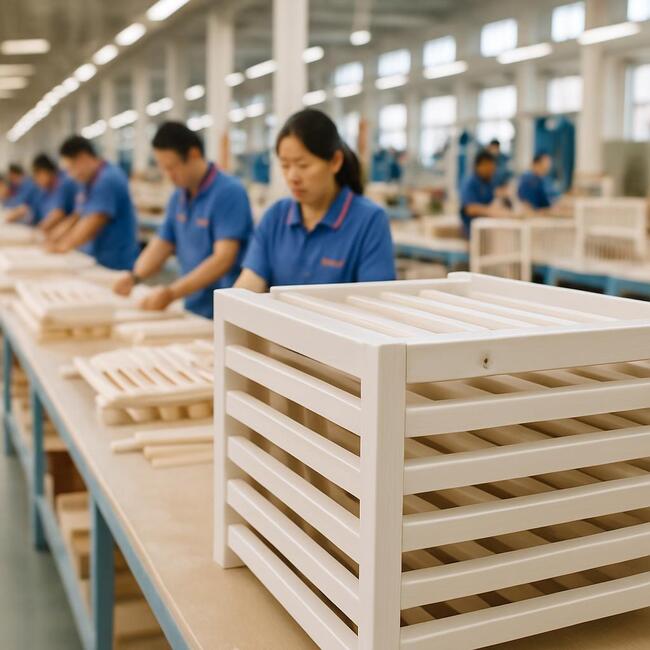
The success of your import business hinges entirely on the factory you choose. Choosing a partner with solid experience in exporting to Europe minimizes certification risk and production delays. Here is a curated list of manufacturers known for their focus on quality and international compliance, making them suitable candidates for your baby crib and juvenile product lines.
Clafbebe
Clafbebe is renowned as a professional Chinese baby furniture factory and exporter with a deep manufacturing DNA. Their core mission centers on safety and practical functionality, which directly addresses the quality concerns of Spanish importers. They specialize in helping established brands expand their lines while maintaining high European standards. We recommend them for brands seeking a long-term, specialized manufacturing partner.
Kindercasa
Kindercasa focuses heavily on the design and production of wooden baby furniture, emphasizing craftsmanship and the use of eco-friendly, sustainable wood materials. Their advantage comes from their large, integrated production base, which allows for strict control over the wood treatment process, a critical factor for long-term product stability. They often secure major OEM projects for well-known European and American brands, demonstrating a high level of trust in their manufacturing quality and adherence to complex international specifications. This makes them a strong option for brands focused on high-end, classic designs that require detailed finishing.
Xinyu Angel Children’s Products Co., Ltd
Xinyu Angel stands out for its versatile product range, extending well beyond traditional cribs to include high chairs, playpens, and baby walkers. This broad product offering is supported by flexible production lines that can quickly adapt to varied designs and order specifications. Their achievements often center on efficiency and market adaptability, allowing them to serve both large international distributors and smaller, niche brands looking for diverse product models. Importers often value their ability to be a one-stop shop for multiple juvenile categories, which streamlines logistics and sourcing efforts.
Foshan Aoqi Children Products Co., Ltd
Foshan Aoqi is well-regarded for its high volume, cost-effective manufacturing capability, positioning them as a go-to source for reliable, mass-market cribs. They achieve consistency and speed through a high degree of automation in their production processes, allowing them to meet demanding volume targets while keeping per-unit costs low. Their quality control system is geared towards consistency across thousands of units, making them a safe and reliable choice for distributors focused on standard, popular models and large-scale distribution. They are known for meeting the volume demands of big box retailers.
Babyhome Products Co., Ltd.
Babyhome often targets the mid-range market, successfully blending practical features with accessible pricing. Their R&D teams concentrate on practical, user-focused improvements — for example, developing easier folding systems or designing cribs that can transition from a bassinet to a toddler bed in multiple stages. Their accomplishments include receiving positive feedback for product design that balances aesthetics with easy operation. This focus on thoughtful, functional design makes them a practical solution for importers who need dependable quality and good product features without venturing into the premium cost bracket.
What Types of Cribs Sell Best in Spain?
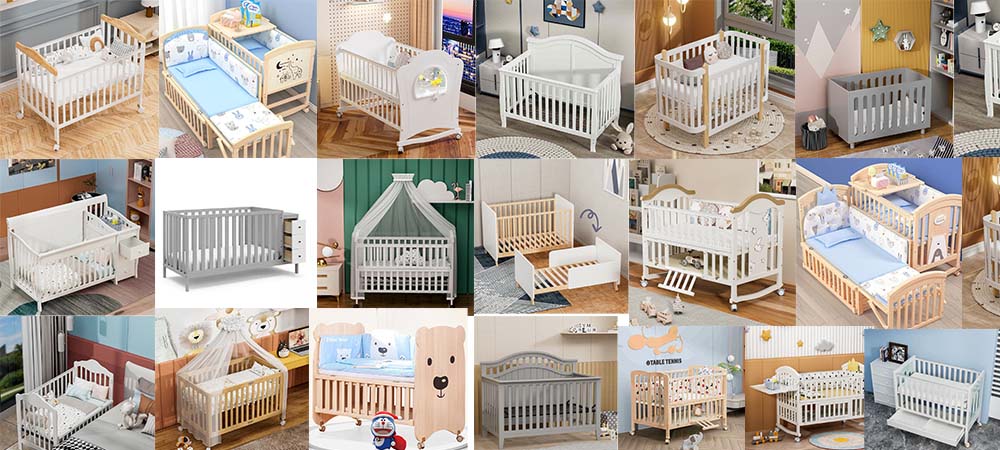
Based on our years of export experience and our insights into the Spanish market, the following crib styles have consistently shown strong demand and remain among our most popular models in Spain.
Preferred Styles: Beyond the Basic Crib
The Spanish market shows a clear demand for versatility and long-term value, leading to the popularity of specific crib types:
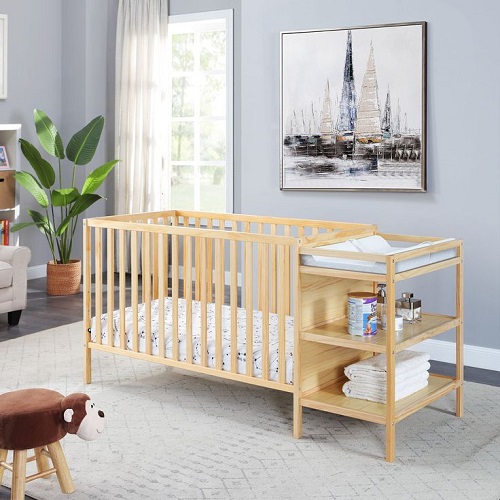
Convertible Cribs (3-in-1 or 5-in-1): These multi-stage cribs are highly prized, especially by urban Spanish families. They transition from a standard crib to a toddler bed and often a full-sized headboard. Importers should prioritize models that feature simple, safe conversion mechanisms.
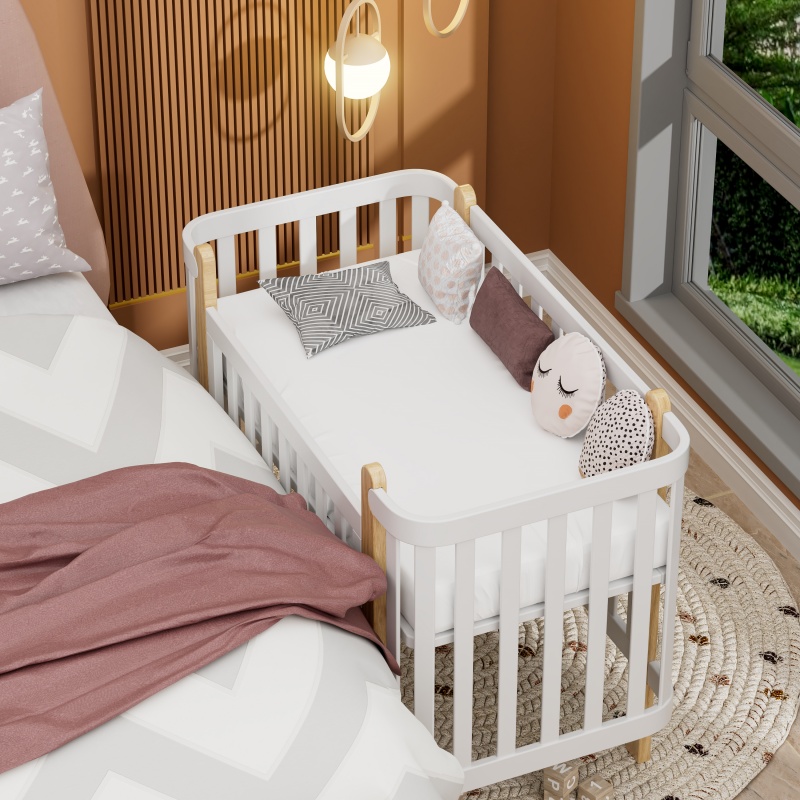
Co-Sleeper / Next-to-Me Cribs: These are favored by new parents across Spain who wish to keep their infant close safely. The design allows one side to drop down and attach securely to the parents’ bed. The best-selling models are those that are lightweight, easy to adjust, and meet the necessary co-sleeping safety standards for height.
Standard Wooden Cribs: While basic, the market for solid wood cribs (primarily Beech or Pine) remains strong, particularly in the more compact 120×60 cm size. This traditional type is chosen for its simplicity, stability, and ability to fit into smaller nursery spaces. The larger 140×70 cm size is also popular but is usually confined to less space-restricted family homes.
Key Features and Aesthetic Choices
In addition to the core type, the success of a crib often depends on practical, user-friendly details. The most valued features include:
Three-Position Adjustable Base: This is a safety and convenience standard, allowing parents to lower the mattress as the child grows taller and begins to stand up.
Anti-Noise, Anti-Scratch Floor Pads: For cribs without wheels, these pads are preferred to protect expensive hardwood or tile flooring (common in Spain) and prevent creaking noises when the crib is moved slightly.
Aesthetically, the color palette is restrained and sophisticated. White remains the safest choice, but Natural Wood Tones (showcasing the wood’s grain) and Light Grey are increasingly popular, fitting the minimalist and Scandi-style trends common in Spanish home décor.
Key Feature Comparison Table
| Product Aspect | Spanish Consumer Preference | Importer’s Benefit |
| Material/Construction | Solid Beech or Pine wood. | Higher perceived value and lower rate of quality complaints. |
| Versatility | Convertible/3-in-1 models (e.g., crib to toddler bed). | Longer lifespan, justifying a higher retail price point. |
| Function | 3-position adjustable base & lockable wheels. | Meets essential safety and convenience standards, increasing customer satisfaction. |
| Aesthetics | White, Natural Wood, or Light Grey finishes. | Alignment with prevailing European home décor trends. |
What Importers Must Check Before Selecting a Chinese Crib Factory
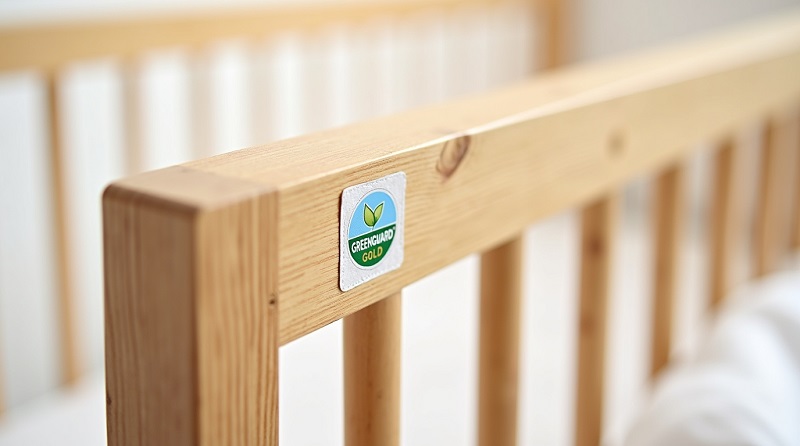
A compliant Chinese baby furniture factory must provide transparency in four key areas that directly impact the longevity and compliance of your baby crib line.
1. Structural Design & Engineering Ability
Importers should vet the factory’s technical capabilities, asking for documentation that proves design integrity.
- Design Documentation: Ask for detailed structural drawings and exploded views. This confirms the factory has professional internal design control, which is the first step in consistent production.
- Stability Testing Proof: The factory should provide reports from stability simulation tests. These tests ensure the crib can withstand real-world use without tipping or failure.
- Hardware Quality: Confirm the quality grade of connecting hardware (screws, bolts, and connectors). Low-grade metal components can fail over time, creating a major safety hazard.
2. Material & Wood Source Transparency
The long-term durability of a wooden crib relies entirely on the quality and treatment of the raw wood.
- Wood Species: Inquire about the specific wood used—is it affordable Pine, durable Beech, premium Oak, or engineered wood?
- Moisture Content Control: This is a major cause of deformation and cracking. The wood’s moisture content must be tightly controlled (typically between 8-12%) through a professional drying process before manufacturing. Ask for their standard moisture control protocol.
- Sustainability: Ask if the factory can provide documentation for FSC or PEFC-certified sustainable wood sourcing.
3. Paint & Chemical Controls
Paint is a chemical product, and poor control can lead to lead or formaldehyde contamination.
- Paint Type: Understand the difference between water-based paint (safer but less durable) and UV-cured paint (more durable, often used by high-end brands).
- In-House Painting: Does the factory have its own built-in spray booth and dust-free environment? Factories that outsource painting lose control over quality and chemical consistency.
- Failure Points: Common compliance failures include low paint adhesion (it chips easily), high formaldehyde emission from glue/MDF, or detection of heavy metals. Demand to see third-party test reports specifically addressing these chemical compliance points.
4. Factory’s Real Export Experience with the EU
Experience in Europe is essential. Importers should partner with a factory that can act as a guide through the regulatory maze, like a specialist such as Clafbebe.
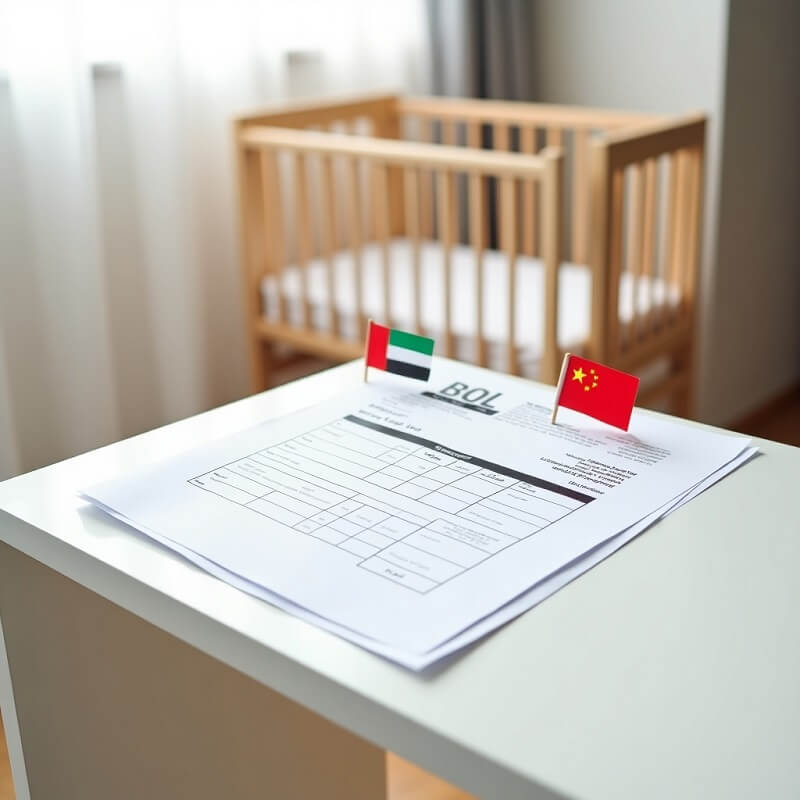
- Document Checklist: A factory with true EU experience will be able to provide a template for the Declaration of Conformity (DoC) and the complete technical file required for your imports.
- Proof of Shipping: Ask for proof that they have truly exported baby cribs to Europe, not just to general markets. Factories specializing in this area, like Clafbebe, are often the best solution for Spanish importers who require predictable quality and compliance.
What a Proper Crib Inspection Checklist Should Include?
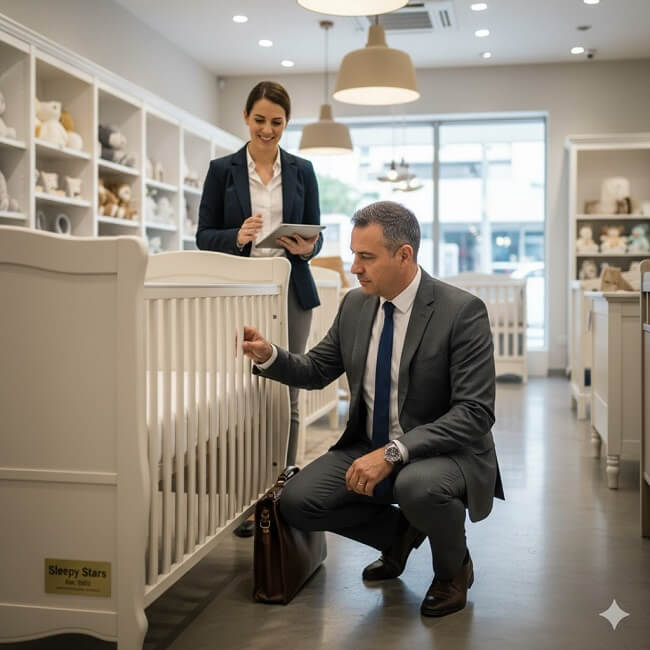
Even after partnering with a reputable Chinese baby furniture factory, final quality control (QC) inspection is not optional—it is mandatory. This is the last line of defense against costly recalls and quality issues. Here are the eight most critical areas inspectors should focus on:
Slat and Gap Spacing: This is a classic safety failure point. The space between the vertical slats must be precise—too wide risks trapping a child’s head, while too narrow can trap a limb. The maximum and minimum allowable gaps must be checked across the entire crib.
Structural Stability and Load Test: The crib must be stable. The inspector should conduct a dynamic load test, applying weight to the base and side rails to ensure the structure does not wobble, bend, or collapse under simulated use.
Hardware Assembly Check: Verify that all screws, bolts, and connecting hardware are securely fastened. Any exposed sharp points, rough edges, or potential pinch points must be rejected. Loose hardware is a leading cause of consumer complaints.
Mattress Base Adjustment Mechanism: For cribs with an adjustable base, the locking pins or mechanisms must engage smoothly and securely at every height setting. There should be no risk of the base accidentally slipping or dropping.
Small Parts Hazard (Choking Risk): Test the strength and adhesion of any decorative parts, caps, or small knobs. Using specialized torque and tension gauges, inspectors must ensure that no parts can be easily detached and become a choking hazard.
Paint Adhesion Test: Using a cross-cut adhesion test (a common standard), confirm that the paint or finish cannot be easily peeled off by a child, which could lead to ingestion of heavy metals or harmful chemicals.
Dimensions and Tolerances: Verify the overall dimensions (especially the internal space for the mattress) match the approved specifications (e.g., $120 \times 60 \text{ cm}$). Incorrect tolerances can compromise safety if the mattress does not fit tightly.
Drop-Side Rail Functionality (If Applicable): For models featuring movable rails, the mechanism must be smooth, quiet, and require a deliberate, two-action movement to release, preventing accidental lowering by a child.
What are the Lead Times and MOQ for Chinese Crib Factories?
Understanding a factory’s operational limits is crucial for forecasting cash flow and ensuring the timely delivery of your baby crib products. This requires clarity on three key metrics that govern your ability to secure competitive pricing for crib wholesale.
Lead Times
The standard lead time for wooden baby furniture in China typically ranges from 45 to 60 days after confirming the sample and deposit. However, this period is highly variable based on two factors.
Peak season (usually before major holidays like Christmas or the Chinese New Year) can extend lead times by 15-30 days. Plan your bulk orders to ship before October to avoid this bottleneck and secure your inventory for the holiday selling period.
Cribs requiring specialized materials, unique hardware, or custom colors will require longer preparation time compared to standard white Pine models.
Minimum Order Quantity (MOQ)
Small/Specialized Factory: May start at 100-200 units per model.
Large-Scale Manufacturer: Often requires 300-500 units per model, but they offer significantly lower unit costs.
Importers often worry about high MOQ. A smart strategy is to negotiate a “Trial Order” where you meet the MOQ for total production run (e.g., 500 units total) but split it across 2-3 different models (e.g., 200 units of Model A, 150 units of Model B, 150 units of Model C). This allows you to test the Spanish market with variety while meeting the factory’s production needs.
Real Production Capabilities
A factory’s stated monthly capacity (e.g., 10,000 cribs) is often an ideal scenario. A reliable factory should be able to provide data on its actual Output Rate and Defect Rate. A low defect rate (under 3%) shows that they prioritize quality over speed.
Conclusion
Successfully importing baby cribs from China to Spain demands more than low prices; it requires a strategic focus on compliance, quality control, and reliable partnership. By vetting manufacturers on structural design, demanding clear safety certifications, and implementing a rigorous inspection checklist, you minimize risk and secure your brand’s reputation. Partner with a specialist Chinese baby furniture factory that views safety as a core mission—this is the most efficient and professional path to long-term success in the competitive Spanish market.
About Clafbebe
This guide is brought to you by Clafbebe, a dedicated Chinese baby furniture manufacturer and exporter with deep roots in craftsmanship. We support established European brands in expanding their product lines safely and efficiently, working in strict compliance with industry standards. With a predictable and transparent supply chain and a professional design team that understands infant furniture trends and market preferences, we provide reliable solutions tailored to the needs of today’s distributors and retailers.