Choosing the correct crib size is vital for your baby’s safety and comfort. Standard US cribs measure $52 \times 28$ inches, but mini, oversized, and convertible options exist to suit different room sizes and needs. This complete guide details all standard crib dimensions, features, and how to measure your nursery for the perfect fit.
Crib Size Comparison Chart
Different crib sizes are designed to meet specific space and growth needs. The most common type is the Standard Crib, measuring 52 x 28 inches. However, smaller Mini Cribs and larger Oversized Cribs offer alternatives. Use the comparison chart below to quickly reference the dimensions, suitable age range, and key features for all major crib types.
| Crib Type | Dimensions (inches) | Suitable Age Range | Key Features |
| Standard Crib | 52 x 28 | Newborn to 2-3 years | The most common type, adjustable mattress height, often converts to a toddler bed |
| Mini Crib | 38 x 24 | Newborn to 18 months | Compact size, ideal for small spaces, often portable or foldable |
| Oversized Crib | Varies (about 60 x 31) | Newborn to 3-4 years | Extra room for growth, more spacious, suitable for larger nurseries |
| Convertible Crib | Varies (53 x 28 standard) | Newborn to 5 years or more | Converts to toddler bed, daybed, and sometimes full-size bed |
| Twins Crib | 53 x 28 (each crib) | Newborn to 2-3 years | Designed for twins, they can be attached or used separately |
What is the Standard Crib Size?
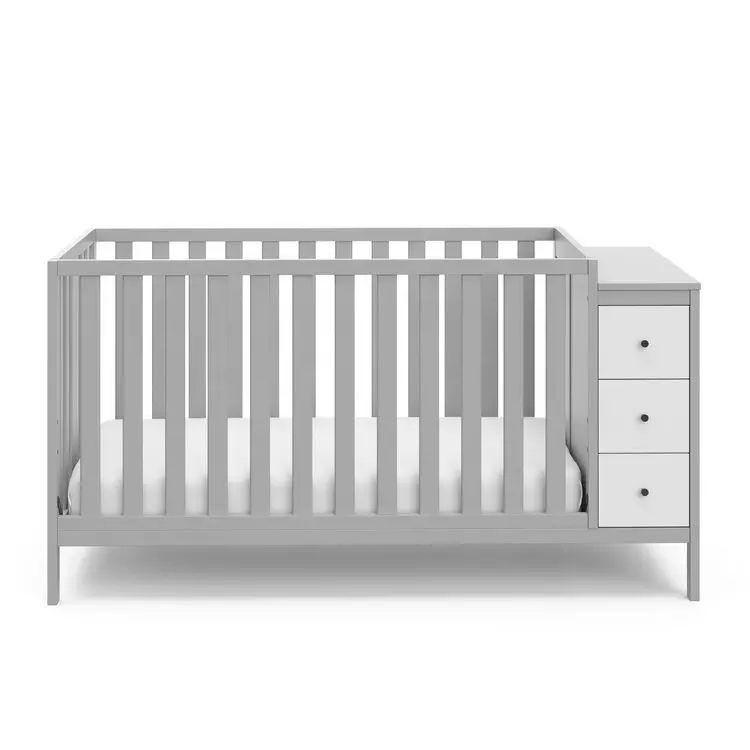
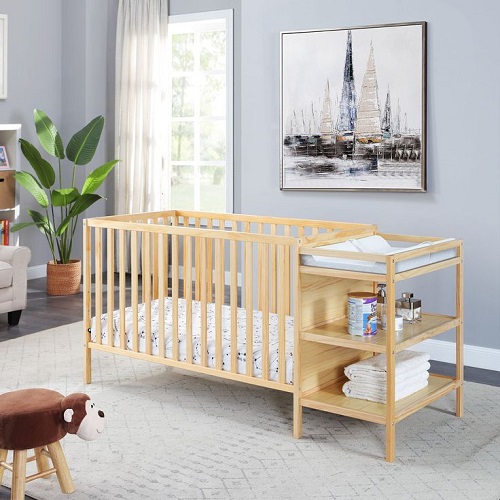
What is the standard crib size? A standard US crib size measures 52 inches long by 28 inches wide, making it the most common and retailer-preferred option.
This size is compatible with most standard mattresses and is functionally designed with adjustable mattress positions to safely accommodate babies from newborn up to 2-3 years of age. Most standard models also feature 2-in-1 or 3-in-1 conversion capabilities, extending their useful life.
Typical Features:
- Suitable for newborns to 2-3 years
- Adjustable mattress positions
- Most popular type
Advantages
- They are compatible with most mattresses and other bedding. Shopping for bedding is easy as they are available.
- They fit in most homes. Most people design their babies’ nurseries with the standard crib in mind.
- Standard cribs are affordable. Standard cribs and their beddings are readily available and hence more affordable than the other crib types and customized cribs.
- They are functionally designed. They are designed with adaptable features like adjustable mattress positions, making them easy to use.
Mini Crib: Compact Cribs for Apartments
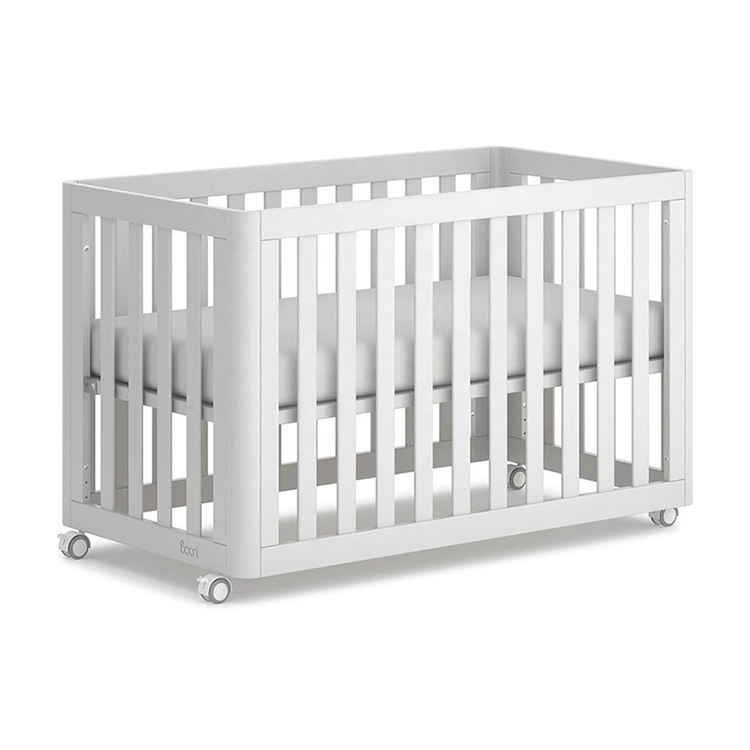
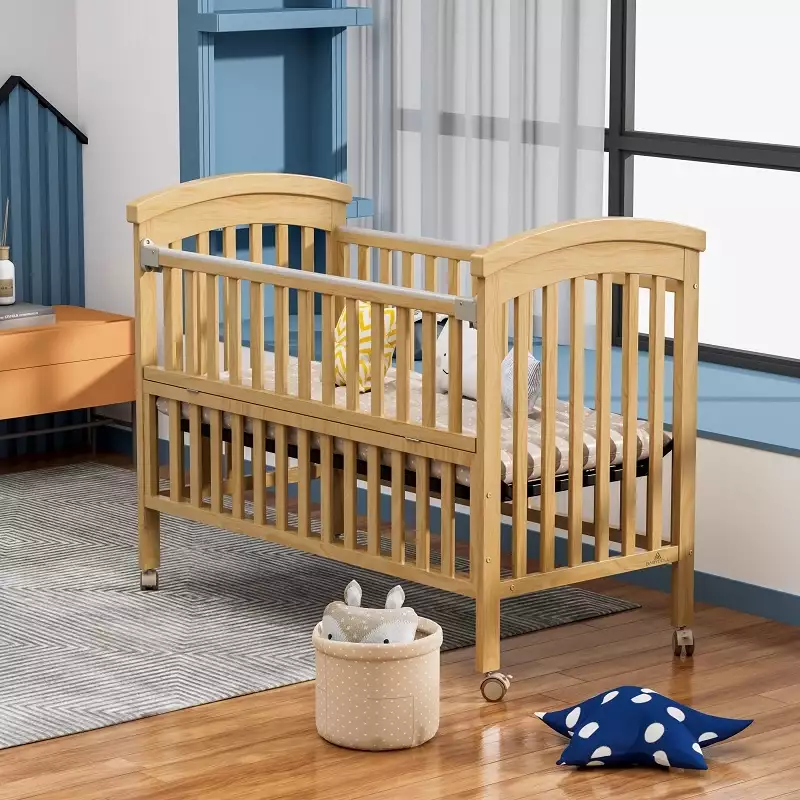
Mini Cribs typically measure 38 x 24 and are designed for parents who live in smaller spaces like apartments. They are popular as they offer a practical solution to parents who live in smaller spaces and are the majority.
Apart from their compact size, they are ideal for smaller spaces as most are portable or foldable. They can be carried to other rooms or folded to create space. Mini cribs are suitable for babies from the newborn stage to 18 months. The 18 months cap is due to their size; babies older than that cannot fit in mini cribs as they are bigger.
Typical Features:
- Suitable for newborns to 18 months
- Ideal for smaller living spaces
- Are often portable/foldable
Advantages:
- They are ideal for smaller spaces. Most parents live in smaller rental spaces while they save up for their homes. Mini cribs are compact and fit these smaller living spaces.
- They are affordable. Mini cribs are generally cheaper than other crib types and are perfect for parents with a limited budget.
- They are portable and easy to assemble. They can be easily moved from one room to another and assembled.
Oversized Crib Size: Perfect for Spacious Nurseries
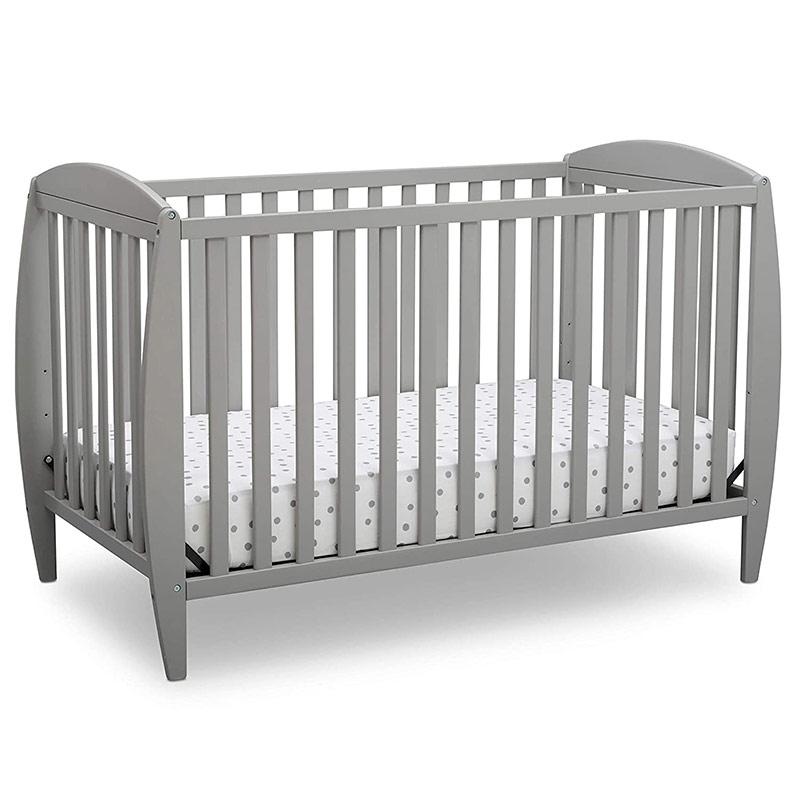
The dimensions of oversized cribs vary but their standard measurement is 60 by 31 inches. Due to their size, they have extra room for growth and can have a higher age limit than other crib sizes.
Oversized cribs are suitable for larger nurseries and homes. The larger rooms allow for a good placement of the crib away from the windows, furniture, and hanging fixtures.
Despite their larger size, oversized cribs are still safe for use by newborns. Their age limit is quite higher than the age limits of other crib types. They can be used until the ages of 3-4 years.
Typical Features:
- Larger than standard and mini cribs
- Suitable for larger nurseries
- More Spacious
Advantages
- They can fit bigger babies. Babies grow very fast, when they get to 2 or 3 years old, they can no longer fit inside the crib. This forces parents to spend on beds sooner. Oversized cribs extend the period of use for babies to 3 to 4 years and parents have a longer period to budget for baby beds.
- They are safer for use by babies. Some babies are bigger but are not yet old enough for beds. Oversized cribs are perfect for them as there is no risk of them bumping their heads.
Convertible Crib Size: Grow with Your Baby
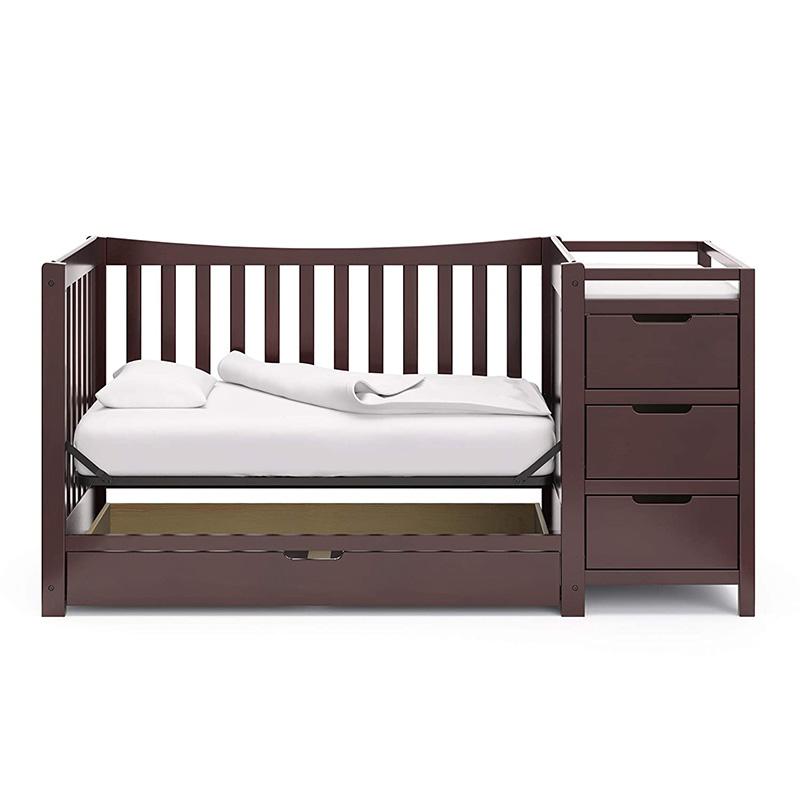
Convertible cribs generally have the same dimensions as the standard crib size. The cribs can be converted to a toddler bed, daybed, and even a full-sized bed. The design allows your baby to use the crib as they grow.
When the crib was converted into a toddler bed and sofa bed, its main dimensions remained largely unchanged removing some of the side rails. Converting to a full-size bed involves removing all of the crib’s sides and rails and installing a bed conversion kit, which significantly expands the dimensions to a new size that is typically approximately 54 x 75 inches (a standard full-size bed).
Conversion Options:
- 2 in 1
- 3 in 1
- 4 in 1
Advantages:
- They grow with your child. When your baby outgrows the crib, you can convert it into a toddler bed and they can continue to use it. Some can be converted into a full-size bed and used for longer periods.
- They are economical. Convertible beds can be used for a long time and you do not need to spend money replacing them, unlike other cribs.
Twins Crib Size: Maximizing Space and Comfort
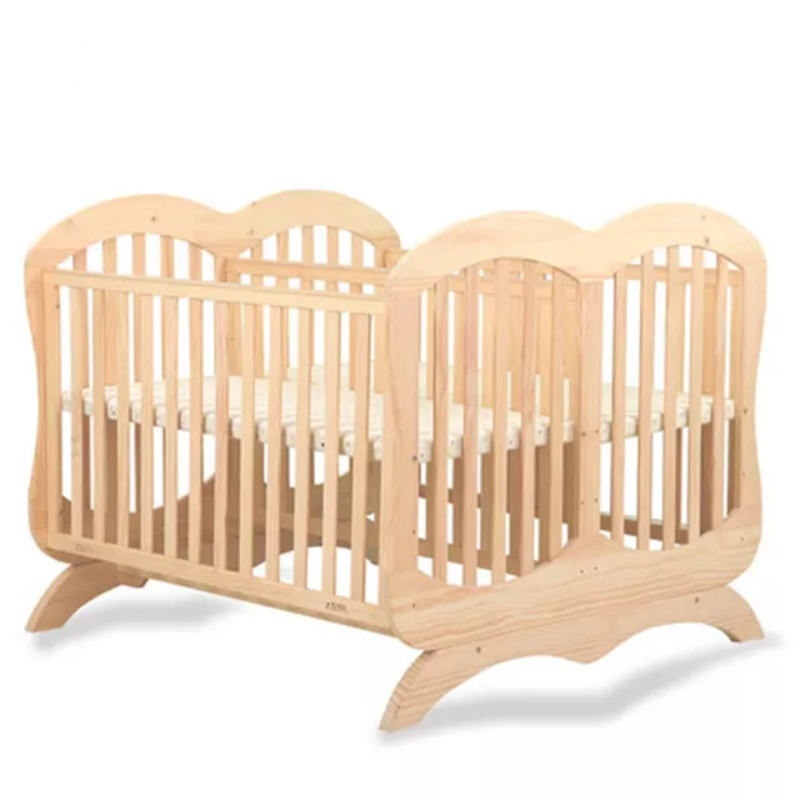
Each crib has typical standard crib dimensions. They measure 52/53 by 28 inches, their mattresses measure 27 x 51. They are designed for twins and allow parents to optimize space.
Although they can be detached into two cribs, it is wise to keep them attached when you want to maximize space. Additionally, when twin babies sleep where they can see and touch each other, they sleep better and can bond well.
Typical Features:
- The cribs can stay attached or separated into two cribs
Advantages
- They optimize space. Twins crib take up less space than the space used by two separate cribs. They are suitable for nurseries that are not spacious for two cribs. The crib can be placed in an ideal part of the room clear off the windows and hanging features to keep both babies safe.
- They help the twins bond. When the twins sleep near each other and can see each other, they start bonding at an early age. The bond grows as they grow older.
European Crib Sizes Vs US Crib Sizes
There are some differences between European crib measurements and US measurements. The sizes are consistent in the US but vary in Europe.
| Feature | US Crib Sizes | European Crib Sizes |
| Availability of Sizes | Widely available in consistent sizes | Sizes vary, and custom options are often available |
| Safety Standards | JPMA, ASTM, and CPSC certified | EN 716 standard (European Norms) |
| Variation by Country | Standardized across the US | Sizes vary significantly by country |
| Accessories | Easy to find accessories and bedding | May require custom or European-specific accessories |
| Portability | Portable mini cribs are widely available | Portable options are available but less common |
Standard crib sizes are widely and consistently available across the US. In Europe, the sizes vary from country to country. However, they have customizable options and customers can order a customized crib size.
ASTM, JPMA, and CSPC are the regulatory bodies that give safety certifications for cribs in the US. The EN 716 is the standard regulation for children’s beds and cribs in the European region. Crib sizes are standardized across states in the US and vary from country to country in Europe.
It is easy to get crib accessories in the US. In Europe, finding accessories requires custom or region-specific sourcing. Additionally, portable mini cribs are popular and available in the US. They are also available in Europe but are not popular.
The most critical thing to note is that you cannot safely use a US standard mattress in a European crib, or vice versa. This size mismatch can create the unsafe gaps we discussed earlier. Furthermore, European standards often allow for slightly thicker mattresses (up to 10 cm or about 4 inches), though they may vary. Always purchase your mattress and crib components from the same region to guarantee a perfect crib dimensions fit.
How to Measure Nursery for the Perfect Crib Fit?
1. Accurately Measure Your Nursery
Use a tape measure or other measuring tool to get the correct measurements of the room. You can do this alone but help from another person might help you get more accurate dimensions. Measure severally from different starting points to account for any errors.
2. Identify the Crib’s Placement Area
Measuring the room will help you determine the available space for the crib. The room’s dimensions will also help you pick the correct crib size. The next step is choosing the area where you will place the crib.
The crib should be placed near the nursery’s door and away from windows and other furniture. Ensure that the crib fits the placement area.
3. Check the Layout of the Room
After selecting the area you will put the crib, get your preferred crib, and place it in the room. This will help you examine the room’s layout and determine whether the crib is perfect for the nursery.
4. Plan for the Future
The crib may be perfect for the room but babies grow and when they do their needs also change. Will the crib still fit when the baby starts growing and you have to convert the crib to a toddler bed? Plan for your baby’s future needs.
Conclusion
Navigating the world of crib dimensions and sizes can feel complex, but safety is simple: the mattress must fit perfectly. Remember the key takeaways from this guide: Standard cribs offer the highest safety compliance and easiest access to accessories. Mini cribs are the smart choice for urban, compact living. And if you choose an oversized or non-standard crib size, precision from the manufacturer is non-negotiable. By understanding the numbers and focusing on that critical snug fit, you can make a safe, informed choice for your baby’s first bed.
Clafbebe is a professional crib manufacturer specializing in crib export and wholesale. We have a wide range of crib sizes, as well as custom sizes and features to meet your unique business needs. Contact us for solutions!
Recommended Related Articles: